Motorcycle suspensions have evolved dramatically over the past century, with the earliest machines featuring a rigid frame with extremely limited shock-absorbing capability. However, as the engines were gaining power rapidly, the effects of the bump impacts grew in sync with the speed of the bike.
By 1907-1908, first ever front fork type suspensions were introduced in bikes and became mainstream. In 1931, the first hydraulically damp telescopic forks were introduced, drastically improving comfort and stability as the oil-filled chamber effectively slowed and controlled the movement of the forks as it compressed and rebounded.
From early adoption to indigenous development of robust front forks and shock absorbers, the TVS Apache RTR series has gradually upgraded its suspension with advanced technologies and has consistently refined and perfected its suspension systems to suit diverse Indian road conditions and riding preferences.
TVS’s Suspension Development
The early 2000’s saw TVS refining the Telescopic forks and shock absorbers and tuning them to maximise comfort and durability. These years of R&D helped the company establish a reputation for a reliable, robust suspension setup.
Mid 2000: Laying the Foundation

By the mid 2000’s, TVS started developing state-of-the art suspension, and these sophisticated suspension setups were integrated in a performance bike, namely: Apache 150 IE surge, which features front Telescopic forks and twin shock absorbers at the rear, followed by the launch of Apache RTR 160.
These suspension setups in the Apache series offered improved damping, sharper handling and more predictable road feedback, setting a new benchmark in the category.
2010-2015: Advanced Technology | Segment-Firsts

TVS’s R&D intensified in this era, and it continued refining its Telescopic forks and shock absorbers for the upcoming platforms. In 2015, TVS Racing became the first-ever Indian performance automotive brand to feature in the Dakar Rally.
It marked a significant milestone for the company, providing a much-needed exposure to the company as it competed against other renowned OEMs across the world. It also acted as a test bed for our engineering division to test suspension technology in the most demanding off-roading conditions possible.
The experience and data gathered from the Dakar Rally directly influenced TVS’s production models, leading to enhanced ride quality, better stability and reliability for everyday use.
The 2015 Dakar Rally became a critical testing platform for advancing TVS’s suspension technology
2015-2019: Racing Influence | Collaboration | New Adoption

Since 2015, TVS has continued to push the limits in suspension technology and started deploying more sophisticated setups in the Apache lineup with a prime focus on handling and comfort.
● Gas-charged rear monoshock – Apache RTR 200 4V launched in 2016, it offered exceptionally planted and consistent ride quality.
● Improved Telescopic Front Forks - the telescopic forks were now being integrated with better oil damping and more stiffer springs, ultimately delivering sharper response and better highway and road comfort.
In 2017, TVS Apache RR 310 was launched, which featured an aluminium rear gas-charged monoshock with die-cast swing arm and at the front it featured KYB inverted cartridge telescopic forks at front. It was another leap forward for TVS as this suspension was tuned to enhance high-speed stability and handling during aggressive riding.
2020-2025: Refining the Ride

Over the past years, TVS Apache’s suspension upgrades have been gradual but meaningful refinements rather than a radical reinvention, which has been evident with the launch of Apache RTR 310 with 41mm USD (Upside Down) forks, offering great rigidity and precise damping.
At rear it features a solid die-cast aluminium swingarm with a directly mounted pre-load adjusted monoshock. It is positioned for optimal damping and allows the rider to adjust the preload to suit different loads and riding styles.
Tuning
● Sporty – Apache RTR 310 suspension is tuned to be plush while maintaining composure on aggressive cornering and braking.
● Confidence inspiring – the combination of rear monoshock and front USD forks offers predictable handling and stability.
● Street Focused – tuned for urban riding dynamics and highway cruising, its suspension setup is on the softer side for better shock absorption.
Book Now!
Types of Suspension in the TVS Apache Portfolio
Let’s break down the suspension setups you’ll find across the TVS Apache lineup, and what each means for your ride:
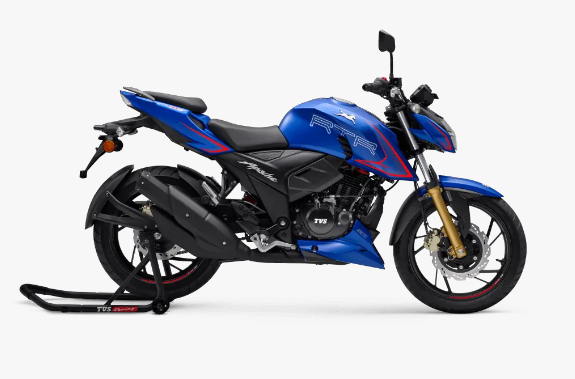
● Telescopic Front Forks
◦ The most common and reliable front suspension system in the Apache range.
◦ Simple, robust, and easy to maintain, telescopic forks use oil and springs to absorb bumps and keep the front wheel planted on the road.
◦ TVS has continuously refined these forks for better damping and comfort, making them a favorite among Indian riders.
● Monoshock Rear Suspension
◦ Many newer Apache models feature a single rear shock absorber (monoshock) mounted near the swingarm pivot.
◦ Monoshock suspensions are designed to improve rear wheel control, smoother ride quality, and are easier to adjust for different loads, as per the rider’s preference.
◦ This setup is especially popular with performance-oriented bikes for its sporty appeal, better traction control and improved manoeuvrability. Since they are lighter, they tend to contribute to the bike’s overall agility.
● Twin-Shock Rear Suspension
◦ Some Apache models, especially the Apache RTR 180, use twin shock absorbers at the rear.
◦ Twin shocks are known for their load-carrying capacity with a softer and more comfortable ride quality.
● Gas-Charged Shock Absorbers
◦ TVS is equipping the Apache series with gas-charged rear shocks, as they help maintain consistent damping performance. Since they offer adjustability, riders can fine-tune suspension stiffness according to road conditions and personal preference.
◦ These shocks use nitrogen gas to prevent oil cavitation, ensuring consistent damping performance even on long, rough rides.
◦ This technology is a direct result of TVS’s racing experience and commitment to delivering top-tier ride quality.
At TVS, we believe every ride should be as thrilling as it is comfortable and safe. Our relentless pursuit for suspension excellence isn’t just about engineering, it’s about understanding what our riding community expects from our bikes. From city streets to winding highways and even toughest of the rally track, we have honed our suspension technology to deliver confidence, control and adrenaline rush with every twist of the throttle.
Know More about the TVS Apache RTR series
RELATED BLOGS: